 sales@batterydeji.com
 English



If you’re sourcing magnetic power banks for your store or distribution network, you already know that product specifications on paper don't always tell the whole story.
A 15W “mag-safe clone” that only hits 7W under real load? Weak N35 magnets that slide right off when someone picks up their phone? Liquid electrolyte cells that swell in 6 months and turn into a safety hazard sitting on a customer’s nightstand?
That's why DEJI developed its new generation of semi-solid magnetic power banks around the problems that matter most to B2B buyers.
Why Are Magnetic Power Banks Becoming More Popular?
Traditional power banks force you to fumble with a cable every single time you need a top-up. Magnetic wireless power banks fix that — they pair wireless charging with strong magnetic alignment for a way smoother experience.
MagSafe and Qi2: What's the Difference?
| Feature | MagSafe | Qi2 |
|---|---|---|
| Ecosystem | Apple ecosystem | WPC industry standard |
| Magnetic Alignment | Yes | Yes, for supported products |
| Wireless Charging | Yes | Yes |
| Device Compatibility | Supported Apple devices/accessories | Compatible Qi2-certified devices |
| Certification | Apple certification applies to eligible products | WPC certification |
| Magnetic Power Banks | Designed for compatible Apple devices | Designed for Qi2-compatible devices |
| Android Support | Limited to compatible accessories/devices | Broader support across supported Android devices |
For magnetic power bank buyers, compatibility should therefore be checked carefully. A product that physically attaches magnetically is not necessarily MagSafe-certified or Qi2-certified.
For B2B purchasing, distributors should verify the product's actual certification, supported charging protocols, wireless output, and compatible device list before placing an order.
What Makes a High-Quality Magnetic Power Bank?
The quality of a magnetic power bank depends on several interconnected technologies.
| Key Factor | What to Look For | Why It Matters |
|---|---|---|
| Battery Capacity | 5,000–10,000mAh or higher | Determines available energy |
| Battery Technology | High-quality Li-polymer or semi-solid battery | Influences safety, lifespan and energy density |
| Wireless Output | Up to 15W depending on device and protocol | Determines wireless charging performance |
| Wired Output | USB-C PD fast charging | Provides faster charging when needed |
| Magnetic System | Strong, stable magnetic alignment | Helps maintain charging position |
| Thermal Management | Temperature monitoring and heat dissipation | Helps control heat during charging |
| Safety Protection | Over-voltage, over-current, short-circuit and temperature protection | Improves operational safety |
| Design | Slim and lightweight construction | Improves portability |
| Display | LED or TFT smart display | Provides real-time power information |
The best products balance these factors rather than focusing on a single specification.
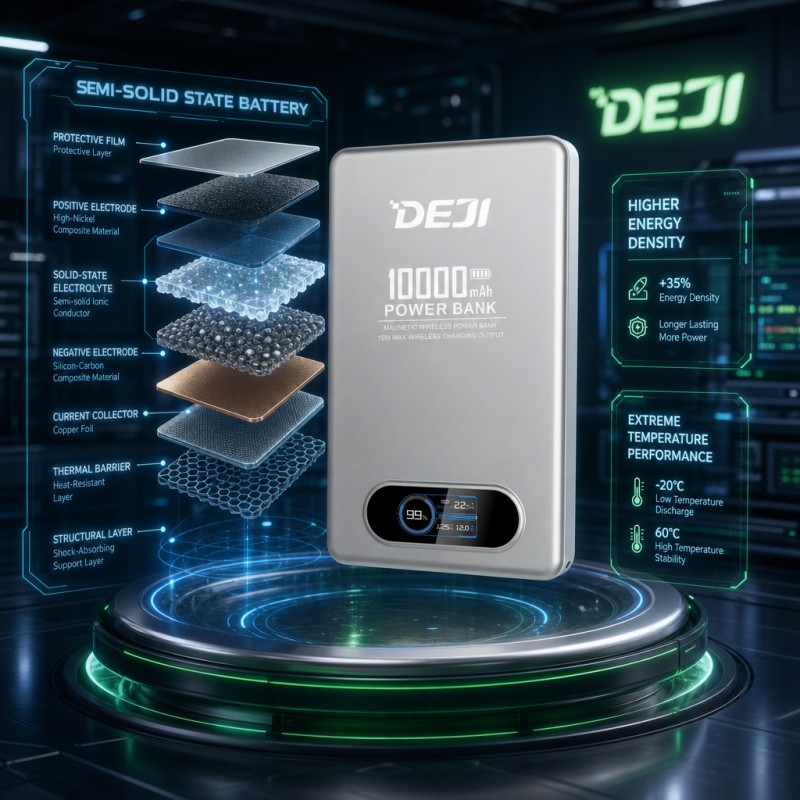
Semi-Solid Battery Technology: The Next Step in Portable Power
Regular lithium-ion and lithium-polymer cells run on liquid electrolytes — that’s the stuff that shuttles ions back and forth between the two electrodes to make charging work.
Semi-solid battery tech swaps that old setup for a way more advanced electrolyte structure. It cuts out most of the free-flowing liquid inside, but still keeps every key electrochemical property you need for a fully functional rechargeable battery.
This hybrid design brings a bunch of real, tangible perks that make portable power products way better.
1. Improved Thermal Stability
Wireless charging naturally generates heat because energy is transferred between charging coils.
Semi-solid battery technology can offer improved thermal stability compared with conventional cell structures, helping manufacturers develop power banks designed for demanding charging environments.
2. Reduced Swelling During Long-Term Use
Battery expansion can become a concern after repeated charging cycles or prolonged storage.
Advanced semi-solid cell structures are designed to help reduce the risk of excessive swelling, supporting more stable battery performance over time.
3. Longer Cycle Performance
Battery capacity gradually decreases as cells go through repeated charge and discharge cycles.
Optimized semi-solid battery chemistry can help slow capacity degradation and maintain more consistent performance over the battery's service life.
Actual cycle performance depends on cell chemistry, operating temperature, charging conditions, and battery management design.
4. Higher Energy Density
For magnetic power banks, size matters.
A high-capacity power bank that is too thick or heavy can be inconvenient to carry while attached to a smartphone.
Higher energy density gives manufacturers greater flexibility to develop slimmer power banks without sacrificing as much usable capacity.
This is particularly valuable for ultra-slim magnetic power banks.
5. Stable Performance During Storage and Transportation
Power banks may spend weeks or months in warehouses or in international transportation before reaching the end customer.
Low self-discharge and stable storage characteristics can help maintain battery performance during distribution.
For B2B buyers, this is particularly important because products may experience longer supply-chain cycles than consumer electronics purchased directly from a local store.
Semi-Solid vs. Conventional Battery Technology
| Feature | Conventional Li-Polymer Battery | Semi-Solid Battery Technology |
|---|---|---|
| Electrolyte Structure | Liquid-based | Hybrid / semi-solid structure |
| Thermal Stability | Depends on cell design | Potentially improved |
| Swelling Control | Depends on cell chemistry and construction | Designed for improved stability |
| Energy Density | High | Potential for higher energy density |
| Cycle Performance | Varies by cell quality | Designed for improved cycle stability |
| Slim Design Potential | Good | Strong potential |
| Storage Stability | Depends on cell design | Designed for stable long-term storage |
| Application | Mainstream power banks | Next-generation portable power |
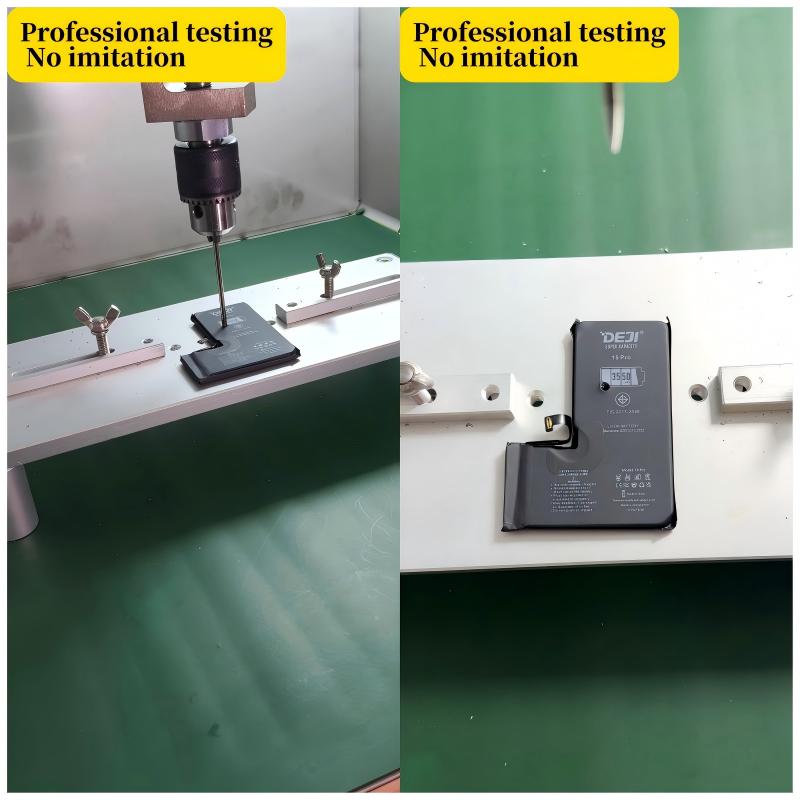
The actual performance of any battery depends on the complete cell design, materials, manufacturing process, protection circuit, and operating conditions. Semi-solid technology should therefore be evaluated through real testing rather than technology claims alone.
Magnetic Strength and Charging Stability
A magnetic power bank needs more than wireless charging coils.
The magnetic system must maintain accurate alignment between the power bank and the smartphone's charging coil.
A stronger and better-designed magnetic system can help:
-
Improve attachment stability
-
Reduce accidental movement
-
Maintain coil alignment
-
Improve charging consistency
-
Make one-handed use easier
However, magnetic strength should not be evaluated by magnet grade alone.
Magnet size, arrangement, magnetic circuit design, housing thickness, charging coil position, and surface materials all affect the final holding force.
For B2B buyers, it is better to evaluate the complete magnetic assembly rather than simply asking whether a product uses N52 magnets.
Wireless Charging vs. Wired Fast Charging
A premium magnetic power bank should ideally provide both wireless and wired charging.
| Charging Method | Typical Advantage |
|---|---|
| Magnetic Wireless Charging | Cable-free convenience |
| USB-C PD Charging | Faster wired charging |
| Wireless + Wired | Flexible charging for different scenarios |
Wireless charging is convenient for everyday use, while USB-C PD is generally preferable when the user needs faster charging.
For this reason, a dual-mode design provides greater flexibility for consumers.
Thermal Management Is Critical
Heat is one of the most important considerations in wireless charging.
Energy conversion through wireless charging can generate additional heat compared with wired charging. A well-designed power bank therefore needs an appropriate thermal management system.
Important design elements may include:
-
Temperature monitoring
-
Intelligent power management
-
Efficient charging ICs
-
Heat-dissipation structures
-
Aluminum alloy housing
-
Optimized PCB and coil layout
DEJI's semi-solid battery technology provides an additional foundation for developing portable power products with improved thermal stability.
The actual operating temperature depends on ambient temperature, device model, charging power, battery condition, and usage conditions.
Capacity: What Size Magnetic Power Bank Should You Choose?
Capacity should always be considered together with portability.
| Usage Scenario | Recommended Capacity | Main Priority |
|---|---|---|
| Daily Commuting | 5,000mAh | Ultra-portable design |
| Business Travel | 10,000mAh | Capacity + portability |
| Outdoor Activities | 10,000–20,000mAh | Extended runtime |
| Corporate Gifts | 5,000–10,000mAh | Branding + compact design |
| Premium Magnetic Power Bank | 10,000mAh | Capacity + slim design |
For many users, 10,000mAh provides a practical balance between capacity and portability.
For B2B buyers, however, the ideal capacity depends on the target market, device compatibility, product positioning, and retail price.
Ultra-Slim Design: Where Semi-Solid Technology Makes a Difference
Traditional high-capacity power banks can become bulky when manufacturers increase battery capacity.
This creates a challenge for magnetic power banks because the product is designed to remain attached to the back of a smartphone.
A thick power bank can make the phone uncomfortable to hold and may interfere with everyday use.
Semi-solid battery technology offers manufacturers another route toward higher energy density and slimmer product structures.
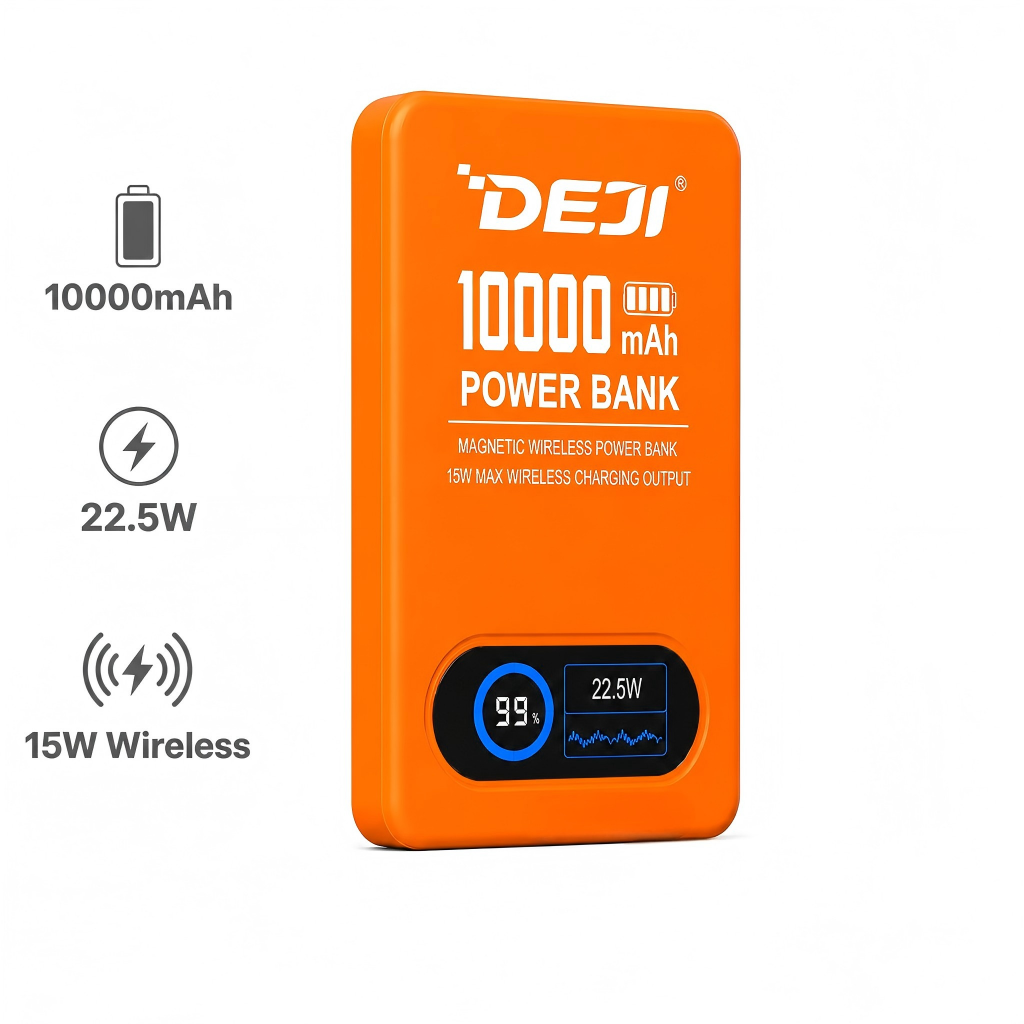
For example, DEJI's new-generation magnetic power bank combines:
-
10,000mAh capacity
-
Semi-solid battery technology
-
Up to 15W magnetic wireless charging
-
Strong magnetic attachment
-
USB-C fast charging
-
TFT color smart display
-
Built-in smartwatch charging mode
-
Aluminum alloy + PC construction
The result is a portable power solution designed around both capacity and physical comfort.
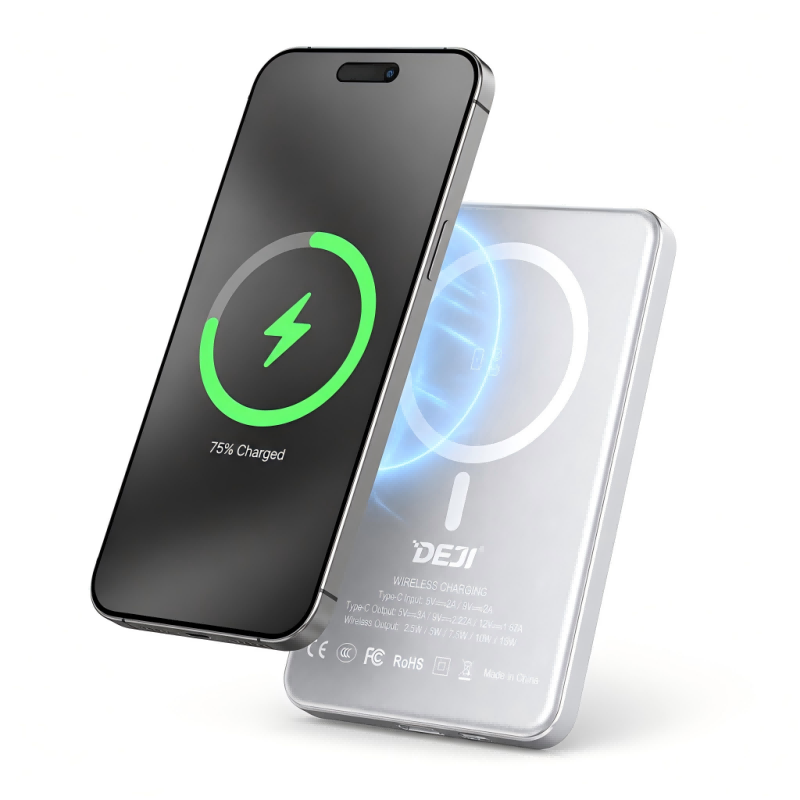
Smart Features for Modern Power Banks
Battery technology is only one part of the product.
Modern consumers increasingly expect power banks to provide real-time charging information.
A TFT color display can show:
-
Remaining battery percentage
-
Output power
-
Voltage
-
Charging status
This gives users better visibility into how the power bank is performing.
Additional features such as smartwatch charging support can further expand the product's usefulness for users carrying multiple connected devices.
Compatibility: iPhone, Android and Magnetic Cases
Magnetic wireless charging compatibility depends on both the smartphone and its case.
For iPhone users, magnetic alignment is available on supported generations and accessories designed for the MagSafe ecosystem.
For Android users, compatibility varies by device and wireless charging technology.
A magnetic ring or compatible case may be required for smartphones without an integrated magnetic alignment system.
For the best charging experience, buyers should verify:
-
Smartphone model
-
Wireless charging standard
-
Magnetic alignment compatibility
-
Case thickness
-
Case material
-
Charging power supported by the device
A high-quality magnetic power bank should clearly communicate its compatibility instead of claiming universal compatibility.
Safety and Quality Standards
Professional power bank manufacturers should implement multiple layers of safety and quality control.
Common areas include:
| Testing / Certification | Purpose |
|---|---|
| UN38.3 | Lithium battery transportation testing |
| IEC 62133 | Battery safety requirements |
| CE | European market conformity |
| FCC | Electromagnetic compatibility requirements |
| RoHS | Restriction of hazardous substances |
| WPC Certification | Wireless charging ecosystem compliance, where applicable |
Certification requirements vary according to product configuration and target market.
B2B buyers should request the relevant test reports and certification documents before placing large-volume orders.
FAQ
Q1: What makes DEJI semi-solid magnetic power banks different?
DEJI uses advanced semi-solid battery technology to improve thermal stability, reduce swelling risk, and provide more reliable long-term performance.
Q2: What is a semi-solid battery?
A semi-solid battery combines advanced electrolyte materials with traditional battery structures to achieve better safety, stability, and energy density.
Q3: What devices are compatible with DEJI magnetic power banks?
They support compatible magnetic wireless charging devices, including supported iPhone models and other Qi wireless charging devices.
Q4: Does DEJI support MagSafe and Qi2?
Compatibility depends on the specific model and certification status. Please contact DEJI for detailed specifications.
Q5: What wireless charging power is supported?
DEJI magnetic power banks support multiple wireless outputs, including 5W, 7.5W, 10W, and up to 15W depending on the model.
Q6: Can I customize DEJI power banks?
Yes. DEJI provides OEM/ODM services including logo, color, packaging, and product customization.
Q7: What certifications are available?
DEJI products can provide certifications such as UN38.3, CE, FCC, and RoHS according to product models and market requirements.
Q8: Who can buy DEJI magnetic power banks wholesale?
DEJI supplies distributors, wholesalers, retailers, and brand partners worldwide.
Q9: How can I get wholesale pricing?
Contact DEJI for product catalogs, samples, pricing, and OEM solutions.