 sales@batterydeji.com
 English



The way people use and fix smartphones has totally shifted these days.
More people are holding onto their iPhones for 3–4 years instead of upgrading every year, and that has pushed demand for reliable battery replacements to a whole new level.
For repair shop owners, refurbishers, and distributors, choosing the right replacement battery is no longer just about finding the lowest price.
The battery you choose affects everything — from repair success rates and customer satisfaction to the resale value of refurbished devices and the reputation your business has built over time.
In 2026, the iPhone battery market offers more choices than ever, from basic budget replacements to advanced battery technologies. Understanding the differences between these options helps repair professionals choose the right battery for each device, customer, and business need.
Different Types of iPhone Replacement Batteries in 2026
Not every replacement battery is designed for the same purpose.
Some batteries focus on affordability, while others are built for performance, reliability, and professional repair environments.
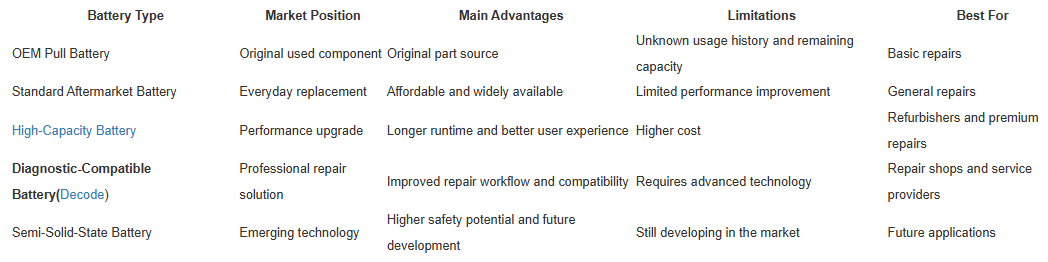
1. OEM Pull Batteries: Original Parts With Unknown History
These are just batteries ripped straight out of used iPhones, then resold as replacement parts.
The only real upside is they’re genuine Apple parts, but their actual condition swings wildly — no two are the same.
You can never tell how many charge cycles they’ve already gone through, how much capacity they’ve got left, what kind of conditions they were stored in, or how the last owner treated the phone.
It might work for a random one-off repair, but if you’re running big refurb batches? Good luck keeping things consistent.
2. Standard Aftermarket Batteries: A Basic Replacement Option
Standard aftermarket batteries are designed to restore normal device operation at an affordable price.
They are commonly used for:
Everyday repairs
Older iPhone models
Cost-sensitive customers
|
Feature |
Standard Aftermarket Battery |
|
Main Goal |
Restore basic battery function |
|
Capacity |
Similar to original specifications |
|
Cost |
Lower |
|
Best Advantage |
Affordable replacement |
|
Limitation |
Limited upgrade value |
For many repairs, this type of battery is enough. However, the refurbished market is becoming more competitive, and customers are increasingly looking for better battery performance.
3. High-Capacity iPhone Batteries: A Better Choice for Refurbished Devices
For refurbishers, swapping out the battery isn’t just a fix — it’s a chance to bump up what your unit is actually worth.
A refurbished iPhone kitted out with a solid high-capacity battery goes a long way: way longer screen-on time every day, way better experience for the end buyer, a selling point you can actually lean on, and it stands out way more against other refurbs on the market.
Unlike those basic stock replacement batteries, a high-capacity one is built entirely around making the whole user experience way better.
Standard Battery vs High-Capacity Battery
|
|
Standard Battery(Original Capacity) |
High-Capacity Battery |
|
Purpose |
Restore original function |
Improve user experience |
|
Battery Capacity |
Standard level |
Increased capacity option |
|
Daily Usage |
Normal |
Longer runtime |
|
Market Position |
Basic repair |
Premium refurbishment |
|
Best For |
General users |
Refurbishers and professional repair shops |
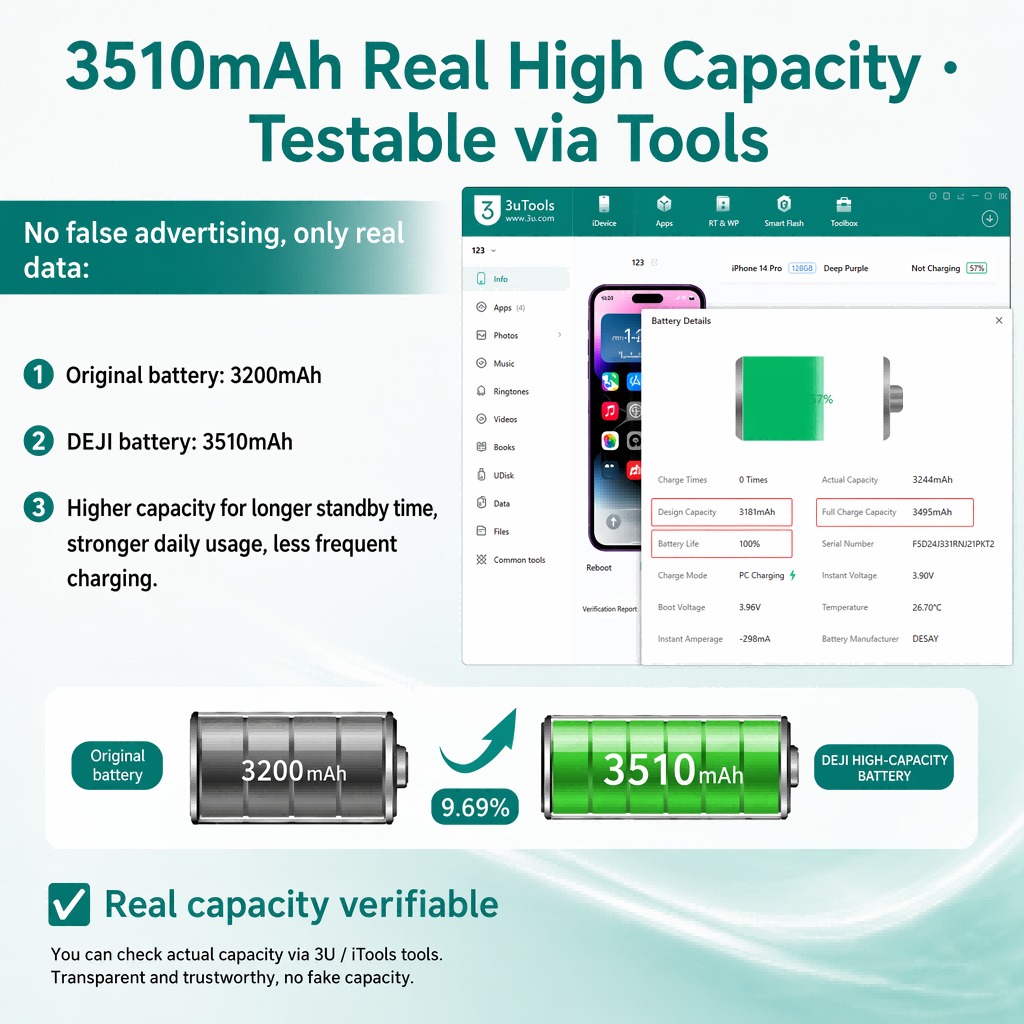
DEJI High-Capacity iPhone Battery Solution
DEJI high-capacity iPhone battery packs are built for repair technicians, refurbishers, and wholesale partners who need more than just a replacement battery.
We don’t simply put a bigger number on the label. Every pack is built around real cell performance, stable power output, and consistent capacity — because a battery that looks good on paper means nothing if it cannot handle daily use.
High-Density Cells That Deliver Real Runtime
A high-capacity battery is not about adding extra numbers to the specification sheet.
DEJI uses high-density battery cells designed to provide:
- Stable power output
- Accurate capacity performance
- Longer daily runtime
- Consistent performance across batches
No exaggerated capacity claims. No recycled cells. Just dependable power that helps refurbished devices perform better.
Dual-Core Safety Protection You Can Trust
For repair businesses, battery quality affects more than the device — it affects your reputation.
DEJI batteries feature a dual-core protection system designed to help control:
- Overcharging
- Over-discharging
- Overcurrent
- Abnormal temperature conditions
The result is fewer unexpected shutdowns, better stability, and more confidence for both technicians and end users.
Brand-New A-Grade Cells, No Recycled Pulls
The cell is where battery performance starts.
DEJI uses brand-new A-grade cells instead of recycled battery materials, helping maintain:
- Consistent capacity
- Reliable cycle life
- Stable performance over time
For repair shops and refurbishers, this means fewer battery-related returns and fewer after-sales problems.
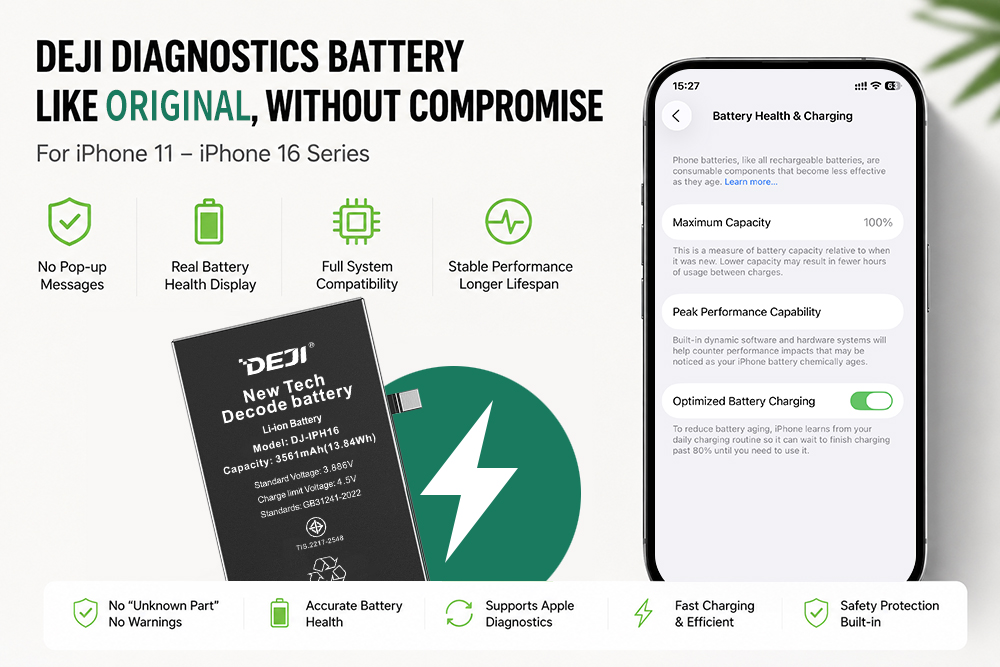
4. Diagnostic-Compatible Batteries: Designed for Modern Repair Workflows
Modern iPhone repairs require more than simply installing a replacement part.
Repair professionals are looking for solutions that improve efficiency and reduce unnecessary repair steps.
Diagnostic-compatible batteries are designed for professional repair environments where compatibility and workflow efficiency matter.
|
|
Traditional Replacement Battery |
|
|
Installation Process |
Standard replacement |
Optimized workflow |
|
Repair Efficiency |
Normal |
Improved |
|
Target Users |
General repairs |
Professional repair shops |
|
Service Value |
Basic replacement |
Premium repair solution |
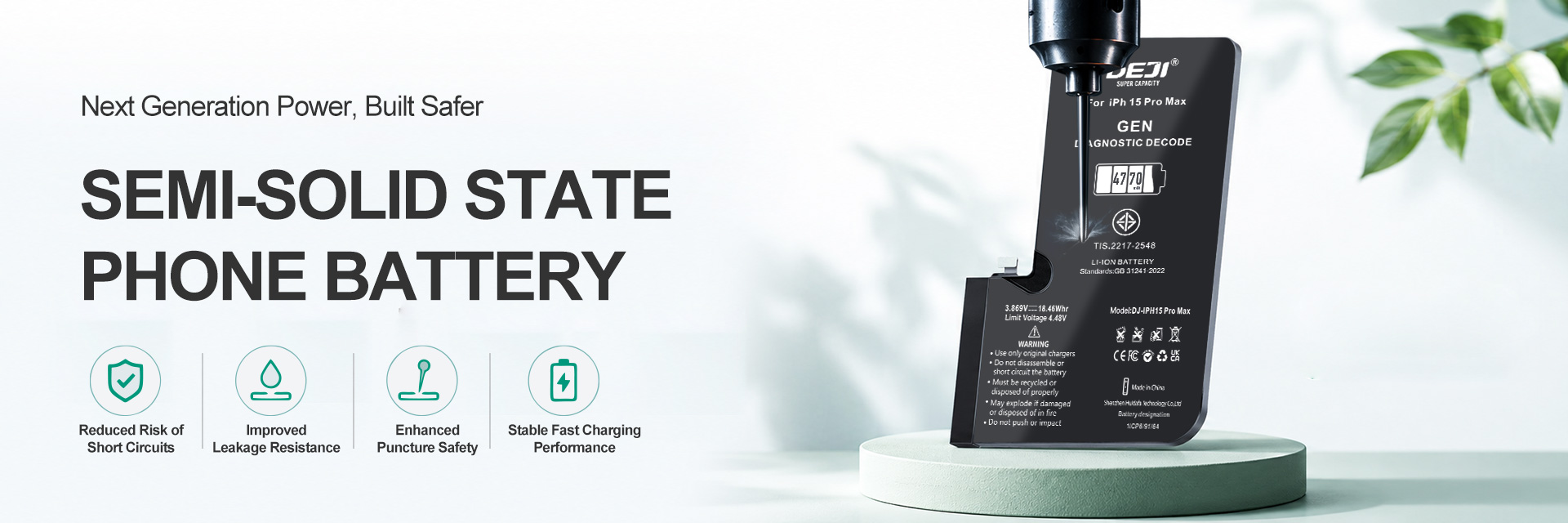
5. Semi-Solid-State Batteries: The Next Step in Battery Technology
Battery technology continues to evolve.
Semi-solid-state phone batteries have attracted attention because of their potential advantages in:
Safety improvements
Structural stability
Energy storage performance
While the technology is still developing, it represents an important direction for future mobile power solutions.
DEJI continues to explore advanced battery technologies to support the next generation of mobile devices.
How to Choose the Right iPhone Battery Supplier
For repair shops and distributors, selecting a battery supplier requires more than comparing unit prices.
Key factors include:
|
Evaluation Factor |
Why It Matters |
|
Cell Quality |
Determines battery stability and lifespan |
|
Manufacturing Capability |
Ensures consistent supply |
|
Quality Control |
Reduces failure rates and returns |
|
Product Range |
Supports different repair needs |
|
Technical Support |
Helps solve product issues quickly |
Why Repair Professionals Choose DEJI battery
Let’s be real — almost every repair shop has dealt with unreliable battery suppliers before. Inconsistent quality, unstable capacity, and unexpected after-sales issues can quickly hurt customer trust.
That’s why more repair businesses choose DEJI.
DEJI doesn’t simply put a logo on generic cells. With its own R&D capabilities and production control, DEJI focuses on consistent quality from batch to batch — no surprises, no unstable performance.
Every battery goes through strict quality checks to ensure, Reliable capacity, Stable performance, Consistent specifications.
From standard replacement batteries to high-capacity upgrades, diagnostic-compatible solutions, and next-generation battery technology, DEJI provides complete solutions for repair shops, refurbishers, and distributors.
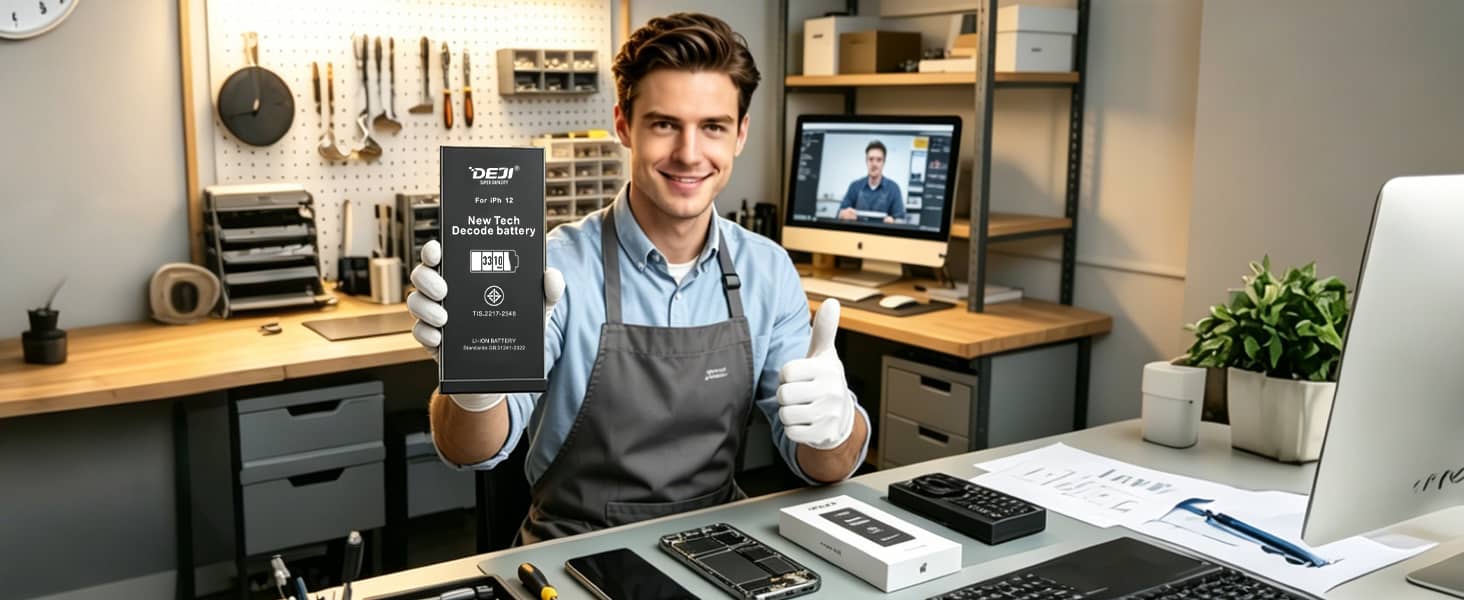
At the end of the day, DEJI doesn’t just move you batteries — they make sure your first-pass fix rate stays 100, your customers don’t blow up your Yelp page with rants, and your shop’s clout never takes a hit over a garbage cell. That’s the kind of plug you can build your whole grind on.
FAQ: iPhone Replacement Batteries in 2026
What is the best iPhone replacement battery in 2026?
There is no single battery that fits every repair situation.
For basic repairs, a standard replacement battery can be a practical choice. For refurbished devices and professional repair services, high-capacity and diagnostic-compatible batteries offer more value through better performance, longer runtime, and improved repair efficiency.
Are high-capacity iPhone batteries worth choosing?
For refurbished iPhones, a high-capacity battery can be a strong upgrade option.
Longer battery life improves the user experience and gives refurbishers an additional selling point when competing in the second-hand market.
Why shouldn’t repair shops choose a battery based only on price?
The cheapest battery is not always the most cost-effective option.
Low-quality batteries may lead to:
- Higher return rates
- More warranty issues
- Additional labor costs
- Customer complaints
For repair businesses, consistent quality often matters more than saving a small amount on the initial purchase.
What should wholesalers look for in an iPhone battery supplier?
A reliable battery supplier should offer more than competitive pricing.
Wholesale buyers should evaluate:
- Manufacturing capability
- Product consistency
- Quality control standards
- Technical support
- Long-term supply stability
A strong supplier helps businesses maintain consistent product quality as order volumes grow.
The iPhone replacement battery market in 2026 is becoming more specialized.
From standard replacement batteries to high-capacity upgrades, diagnostic-compatible solutions, and emerging battery technologies, different products are designed for different repair needs.
For repair shops, refurbishers, and distributors, choosing the right battery partner can help improve repair quality, reduce after-sales issues, and deliver a better customer experience.
DEJI provides professional iPhone battery solutions designed for the global repair market.
Better Battery. Better Repairs. Better Business Value