 sales@batterydeji.com
 English



Most buyers who get burned by a bad battery supplier do not get burned because they negotiated badly. They get burned because they never checked who they were actually buying from. The first order arrives, the cells are fine, the price looks good — and then the next shipment underperforms, the "factory" stops answering, or the certificates turn out to belong to a different product entirely.
The problem is that the phrase "wholesale phone battery supplier" covers at least three completely different kinds of business, and only one of them gives you control over what you are actually buying. This guide is a buyer's checklist: what to verify, in what order, and which signals should end the conversation before you spend money.
Key Takeaways
- A "wholesale supplier" can be a manufacturer, a trading company or a platform reseller — only the manufacturer lets you control cell grade, protection board and labelling.
- Verify certificates against your specific model number, not against the supplier's family certificate.
- Ask for a defect rate and how it is measured. "High quality" is not a number.
- Test 5–10 pieces of the exact model as a batch before you scale up — delivered capacity, internal resistance, protection behaviour and device-level data.
- Two or three red flags together is a pattern, not bad luck. Walk away.
First, Work Out Who You Are Actually Talking To
There are three kinds of business hiding behind the phrase "wholesale phone battery supplier", and the checklist means something different depending on which one you have in front of you.
The manufacturer
Runs the production lines, buys the cells, assembles the packs, prints its own branding, and holds the certifications in its own name. This is the only one of the three where you can decide what actually goes inside the product: cell grade, protection board, silkscreen, packaging. If you plan to build a brand on repeat orders, you eventually need to be here.
The trading company
Perfectly legal, extremely common, and not automatically a problem. The difference is that they buy from someone else, so your quality depends on a factory you never speak to. So ask the direct question: do you own the production lines, or do you source finished packs? A trading company that answers honestly is workable, provided you price in the extra margin. One that calls itself a factory and then cannot show you a production floor is a different conversation.
The platform reseller
No inventory of their own, no factory relationship you can trace. Fine for a one-off trial quantity. Poor for repeat supply, because what you get next month is whatever happened to be in a marketplace listing that week.
| Type | What you can control | Works well for | Main risk |
|---|---|---|---|
| Manufacturer | Cell grade, protection board, silkscreen, packaging | Own-brand ranges, repeat orders, custom specs | Higher MOQ than a reseller |
| Trading company | Choice of finished packs only | Small volumes, mixed-model consolidated orders | Quality traced back to a factory you cannot audit |
| Platform reseller | Effectively nothing | One-off samples and trials | Batch-to-batch inconsistency |
Quick way to sort them: ask for the factory address, then ask what happens if you send someone to visit. Manufacturers say yes without checking their calendar first.
The 8-Point Vetting Checklist
Eight things to check, ordered so that a bad answer early saves you the most time. The first four are about who and what you are buying. The last four are about the commercial relationship.
| # | Check | The question that matters | What a good answer looks like |
|---|---|---|---|
| 1 | Factory entity and scale | Registered name, plant address, area, lines, headcount | Specific figures, and a yes to a live video walk-through |
| 2 | Cell grade and source | New or refurbished? Which grade? Which protection IC? | Written confirmation, not adjectives |
| 3 | Certificates | Certificate number, issuing body, model on the certificate | Traceable to the issuer and matching your model |
| 4 | Failure rate and policy | What is the defect rate, and how is it measured? | A number, a measurement basis, and a named contact |
| 5 | MOQ and lead time | Separate answers for stock, own-brand and OEM | Three different numbers, not one |
| 6 | Sample testing | Will you supply 5-10 pcs of the exact model first? | Yes, without hesitation |
| 7 | OEM capability | Who prints the label, and where is it applied? | Printed and applied in the factory |
| 8 | Commercial terms | Payment, incoterms, and who handles shipping documents | Clear answers on lithium freight paperwork |
1. Factory entity and scale
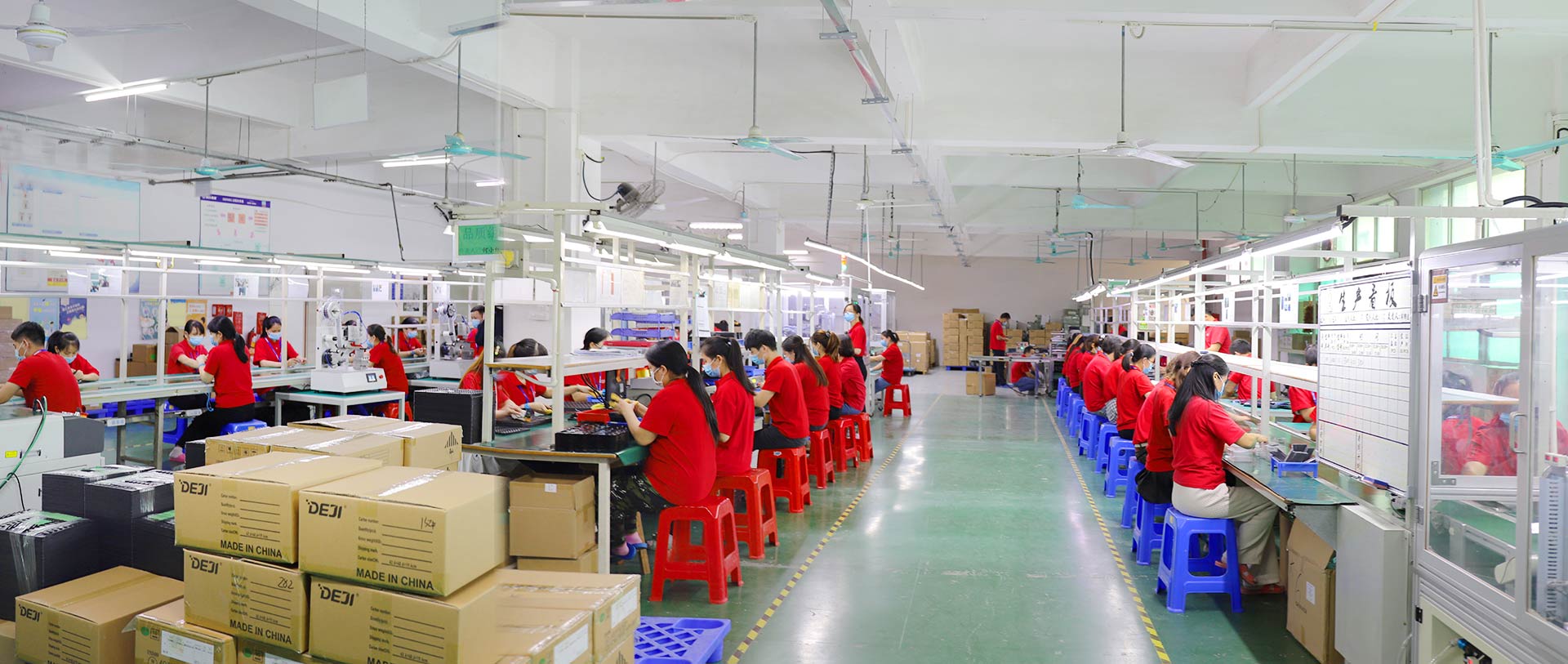
Ask for the legal company name, the registered address, and the actual production site if the two differ. A credible answer comes with numbers attached: plant area, number of production lines, headcount. Round figures that nobody can back up deserve suspicion. You can also ask for the 360° factory tour or a live video walk-through. Both are standard practice now, and both are awkward to fake at short notice. (Here is how we present our own factory.)
2. Cell grade and cell source
This is where most of the cost sits, and most of the failure risk too. Four questions worth putting in writing:
- Are the cells brand new and unused, or pulled or refurbished?
- What grade are they? A grade, or a lower grade that has been capacity-binned?
- Is the chemistry specified, for example pure cobalt rather than a blend?
- Which protection IC and PCB scheme is used, and does it include NTC temperature sensing?
"High quality" is not an answer to any of those. If that is all you get back, you have still learned something useful.
3. Certificates, and how to check them
Certificates are among the easiest documents to misrepresent, which is exactly why they are worth ten minutes of checking. A folder of PDFs is not proof on its own. Instead:
- Get the certificate number and the issuing body, then check them against the issuer's own records. Not against a copy the supplier sent you.
- Confirm the model designation on the certificate matches the model you are ordering. A family certificate belonging to the cell supplier tells you nothing about the assembled pack.
- Ask which certifications apply to your specific SKU. The ones that come up most often: IEC62133, UN38.3, CE, FCC, RoHS, KC, PSE, TUV, CB, plus ISO9001 for the factory's quality system.
- For shipping, confirm UN38.3 and MSDS exist for the exact model. Your carrier will ask, and will not accept substitutes.
4. Failure rate, and what actually happens when a battery fails
Ask for the defect rate, then ask how it is measured: per shipment, per model, or per year? That follow-up is the useful half of the question, because a vague answer usually means nobody is tracking it. Then move to policy, which matters more than the number itself: replacement terms, who pays the return shipping, how long the window stays open, and whether you are dealing with a person or a form.
5. MOQ, lead time and stock reality
Ask for three separate numbers: MOQ per model, lead time on stock items, and lead time on OEM orders with your logo and packaging. In practice those three are very different, and a supplier who quotes a single lead time for everything is guessing.
6. Sample testing you can actually run
Never scale up with a supplier who has not passed a sample test. The next section covers what to measure.
7. OEM capability: silkscreen, packaging and labels
If your business depends on your own branding, nail down four things: who prints the cell label, what the print minimum is, how artwork gets approved, and whether labels are applied at the factory or shipped loose for you to apply. Labels applied in the factory remove one failure point from your own process.
8. Commercial terms
Payment terms, currency, incoterms, and the one people forget: who handles the battery shipping documentation. Lithium cells are regulated freight. A supplier who cannot produce the paperwork will cost you more in delays than they ever saved you on unit price.
Sample Testing: What to Measure Before a Bulk Order
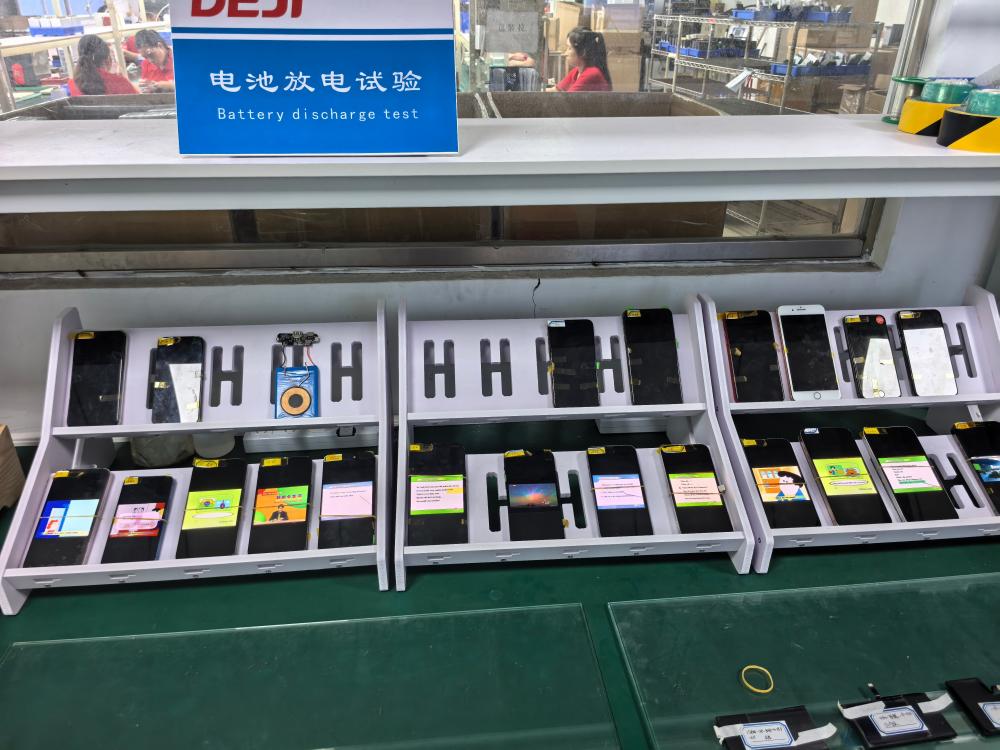
Order 5-10 pieces of the exact model you plan to stock, and test them as a batch rather than as individual units. Batch behaviour is what you are buying at volume.
| What to test | How | What you are looking for |
|---|---|---|
| Delivered capacity | Discharge test against the label rating | Small positive variance is normal. Consistent under-delivery is not |
| Internal resistance | Compare every unit in the batch | Outliers point at inconsistent cell sourcing |
| Charge and discharge behaviour | Full cycle, watching voltage and temperature | Reaches expected voltage without abnormal heating |
| Protection board | Trigger over-charge, over-discharge and short circuit | Protection actually cuts in, on every unit |
| Physical build | Connector fit, adhesive, label durability, pouch size | Fits the model without force, survives handling |
| Device behaviour | Install it and use it in the phone | Battery data reports correctly, no error prompts |
Keep the results per supplier, in a file somewhere. When three quotes are sitting in front of you, that file is what turns a price discussion into a sourcing decision.
Red Flags That Should End the Conversation
- Will not give a factory address, or gives one that does not match the registered entity.
- Refuses a live video call from the production area.
- Quotes a price far below the market. In cells, that gap is usually grade, not efficiency.
- Cannot state a defect rate, or states one with no measurement basis behind it.
- Sends certificates as images with the model number cropped out.
- Answers technical questions with marketing copy.
- Pushes for full payment, off-platform, before a sample.
Any single one of these can have an innocent explanation. Two or three together is a pattern, and patterns are what you are actually screening for.
What This Looks Like on Our Side
The fair thing to do at this point is turn the checklist around. So you can run the same questions past us:
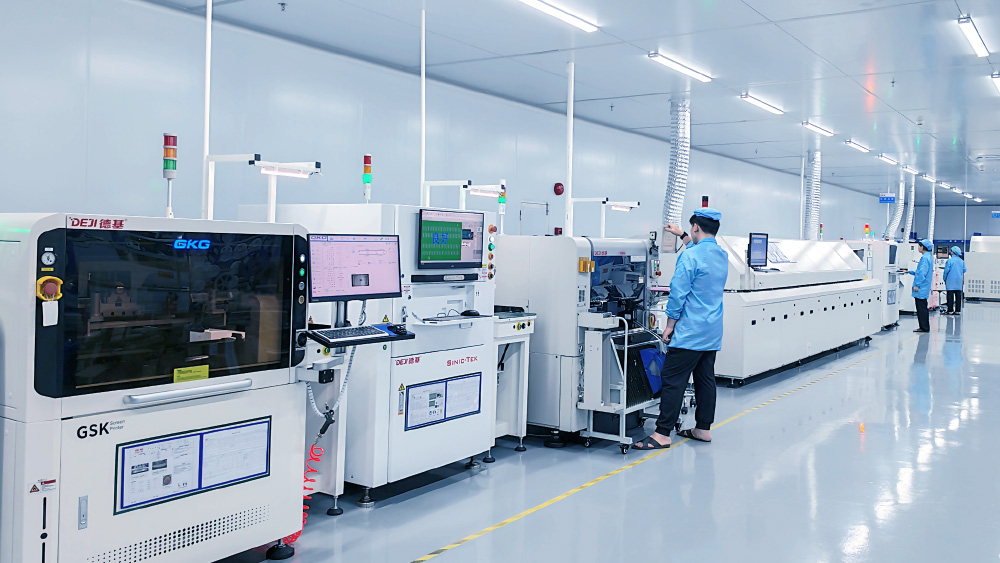
- Entity and scale. DEJI Battery(Huidafa), founded in 2006. Two factories, in Shenzhen and Dongguan, over 20,000 m² of floor area, five production lines, around 200 employees. Both the 360° online tour and physical factory visits are available.
- Cells and boards. 100% brand-new, unused cobalt cells at A+ grade, with double protection IC and NTC sensing on the PCB. No refurbished cells, and no capacity-binned downgrades.
- Certifications. CE, FCC, RoHS, PSE, KC, UN38.3, MSDS, IEC62133, CB, TUV US, UKCA and Anatel, plus an ISO9001-certified quality management system. Ask us for the certificate numbers and issuing bodies for your exact models, then check them yourself.
- Track record. Our repair rate is 3 per 10,000 units, against an industry average usually quoted around 1 in 100.
- MOQ and lead time. DEJI-brand and unbranded orders start at 10 pcs per model; OEM orders with your logo and packaging start at 200 pcs per model. Stock items ship in 2-5 days, OEM first orders in 7-10 days. Full terms are on our wholesale and OEM page.
You are welcome to test every one of these claims before you place an order — including the uncomfortable ones. That is the point of the checklist.
Once a supplier passes the checklist, the next question is what to actually stock. Two resources worth reading alongside this guide: our practical guide to iPhone battery lifespan for the technical side of replacement quality, and the Decode battery range for models that require diagnostic-ready behaviour after installation.
FAQ
Should I buy from a trading company?
Sometimes, yes — if the volumes are small, the model range is wide, or you value consolidated shipping. Just price in the extra margin and ask who actually manufactures the pack. Avoid any trading company that claims to be a factory.
What is a reasonable MOQ for phone batteries?
It varies by model and by whether you need custom branding. Unbranded and own-brand orders are commonly available from around 10 pcs per model; custom OEM packaging is usually in the 200–1,000 pcs per model range.
How long does verification take?
Business licence and certificate checks take a day. A sample test takes one to two weeks including shipping. A factory video call takes an hour. Compared with the cost of a bad first bulk order, the time is trivial.
How do I confirm a certificate is genuine?
Take the certificate number and the issuing body, then check them against the issuing body's own records — not against a copy provided by the supplier. Then confirm the model designation on the certificate matches the exact model you are ordering. A certificate that cannot be traced to its issuer, or that covers a different model, tells you nothing about your order.
Can I visit the factory, or request a video tour?
Both are reasonable to ask for, and a manufacturer should be comfortable with either. Many factories now offer a 360° online tour as a starting point, followed by a scheduled live walk-through of the production floor. If a supplier is evasive about either, treat it as a red flag rather than a scheduling issue.
Next Step: Put This Checklist Against Us
If you are evaluating suppliers right now, send us your target model list and the checklist points that matter most to your business. We will answer them against your exact SKUs — cell grade, certificate numbers, MOQ, lead time and sample terms — so you can compare us on the same basis as everyone else.
What to send us:
- The models you want to stock (for example, iPhone 16 Pro Max, Galaxy S24)
- Target quantity per model
- Whether you need your own logo and packaging
- Which checklist points matter most to you — we will answer those first
Get your wholesale price list within 24 hours
Our sales manager replies with preferential pricing, certificate numbers for your exact models, and sample terms.